Spider snail shell
Spider snails belong to the family Molluscaceae in the order Gastropoda. The shell of the spider snail is solid and solid, like a spider. The shell is 155 mm high, 80 mm wide, and there are about 9 layers of spiral shells. The shell surface is densely covered with thin spiral ribs. Above the sutures, the shell surface suddenly expands to form shoulder angles, on which there are undeveloped nodules. Above the spiral shell layer, there are two more developed nodule rows. Below the suture line of the lower spiral shell layer, there is a wide and flat annular protrusion. The shell is yellow white, mixed with brown spots and patterns. It is distributed in Taiwan, Hainan Island and the Xisha Islands in China, and widely distributed in the Indo West Pacific tropical sea area abroad.

Oyster shell
Clams, also known as round clams, hard shell clams, or quails, are edible marine bivalve mollusks native to the east coasts of North and Central America, from Prince Edward Island to the Yucatan Peninsula. It is one of many unrelated edible bivalves, commonly referred to as clams in the United States. Hard clams are common throughout New England, northern Canada, and the East Coast of the United States to Florida; But they are particularly abundant between Cape Cod and New Jersey, where sowing and harvesting them is an important form of aquaculture business. For example, this species is an important member of the benthic community of suspended feeding animals in the lower Chesapeake Bay.

Large navel parrot shell
Nautilus is a general term for marine mollusks in the family Nautidae, belonging to the order Cephalopoda. There are 2 genera and 6 species, with curled pearl like shells that can grow up to 26 centimeters in size, but adult parrots generally do not exceed 20 centimeters. Usually only 16 centimeters. The shell is composed of many chambers, and the outer shell is located inside the shell. There is a diaphragm separating each chamber; Two pairs of gills; 63-94 wrists, but without suction cups. The shell is thin and light, coiled in a spiral shape, with a white or milky white surface. The growth lines radiate from the navel of the shell, smooth and fine, mostly reddish brown in color. The entire spiral shell is smooth like a disc, resembling a parrot's beak, hence the name "Nautilus".

Yi Beike
Mussels are marine organisms in the family Mytilidae of the phylum Mollusca. The shell is wedge-shaped, with a black brown surface, smooth and glossy; The growth pattern is fine and dense, and the inner surface of the shell is gray blue in color. The shell edge has a narrow edge where the outer skin is rolled in, and there are obvious scars on the adductor muscle and outer shell. The hinge has 2-5 granular small teeth; The ligament is slender and located at the dorsal edge of the shell, and is brown in color. Thin jacket, thick jacket edge. Mussels are widely distributed along the coast of China. Growing on coastal rocks, it mostly inhabits areas with rapid seawater currents and clear water quality, and has strong resistance to adverse environments such as red tide and sewage. Food is mainly composed of organic debris and diatoms.

Bishop's pen snail shell
The mitre shell of the pen snail is a marine snail belonging to the family Callichthyidae in the subclass Gastropoda. The shell is thick, typically in the shape of a bullet, and slightly resembles a bishop's crown, hence the English name bishop's crown snail. Pen snails are common in the Indo Pacific region, inhabiting shallow sandy bottoms. The largest type of bishop's pen snail is 10 centimeters long, with a white shell surface and red yellow patches. Shell white, spiral tower round, shallow stitching; There are red spots on the surface of the shell, with a brilliant color.

Big bamboo snail shell
The large bamboo snail is a member of the bamboo snail family, with slender shells, a snail tower shape, and multiple layers of snails. The shell is large and sturdy, with a light flesh color and luster. Each layer of the snail usually has black markings, and the lower half of the body has lighter markings. The shell can reach a length of up to 27 centimeters. The shell is heavy, glossy, with a wide body layer and a long shell mouth. The later spiral layer is slightly convex and smooth. Early snail layers had weak longitudinal ridges, a milky white shell surface, and fractured snail bands composed of brown patterns. The shell opening is small, the suture band is obvious, and there is no umbilical hole. The outer lip is not thickened, and the interior is smooth. Twist of the shaft lip. The mouth cap is oval in shape, with the nucleus located below. Lack or only marginal teeth on the tongue. It inhabits shallow sandy bottoms in tropical Indo Pacific waters and is carnivorous.

Marble taro shell
The outline of the marble taro snail shell is generally straight, with a slight protrusion near the upper part. The shoulders are angular in shape, with strong nodules to almost smooth. The spiral tower is low to quite high, with contours ranging from slightly concave to slightly concave. The secondary snail layer has nodules ranging from strong to weak. The slope under the last layer of suture line of the adult shell is concave, with 2-4 weak spiral grooves and lines, and the spiral carving is often worn out. The snail layer near the bottom quarter to half usually has weak equidistant spiral ribs. The toxicity of the marble cone snail belongs to protein toxicity, similar to that of venomous snakes, but significantly stronger than that of venomous snakes by several times.

Garden snail shell
The garden snail belongs to the "Halix" snail genus, which is native to central western Europe such as France and England. It usually inhabits gardens or shrubs, hence it is called the "garden snail" or the scattered snail. There are dense and delicate engraved patterns, with multiple dark brown spiral shaped bands that block the yellow spots or stripes that intersect with them., Shells have 4.5 to 5 snail layers, with a shell height of 29 to 33 millimeters and a shell width of 32 to 38 millimeters. The shell surface has obvious threads and growth lines, and the spiral part is short. The embryonic snail layer is smooth, and the body snail layer is particularly enlarged, with extreme inclination in the forward direction.

Realistic Octopus with Rest Animation AR Model
For temperate mollusks, living underwater, adapt to the water temperature can not be lower than 7 ℃, the proportion of sea water 1.021 the most suitable, low salinity environment will die. Can feed on large animal plankton and grow. Widely distributed in the world's oceans of tropical and temperate waters.

Snail with animation binding 3D model AR animation

Popular Models


Random Model


GB game cartridge with Pok é mon Gold
1180 View

Terracotta railing vase
866 View


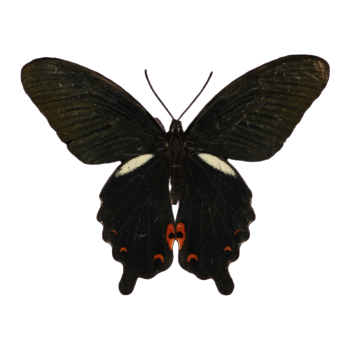
Black Phoenix Butterfly Specimen
1010 View

Log Fence Kit
681 View